
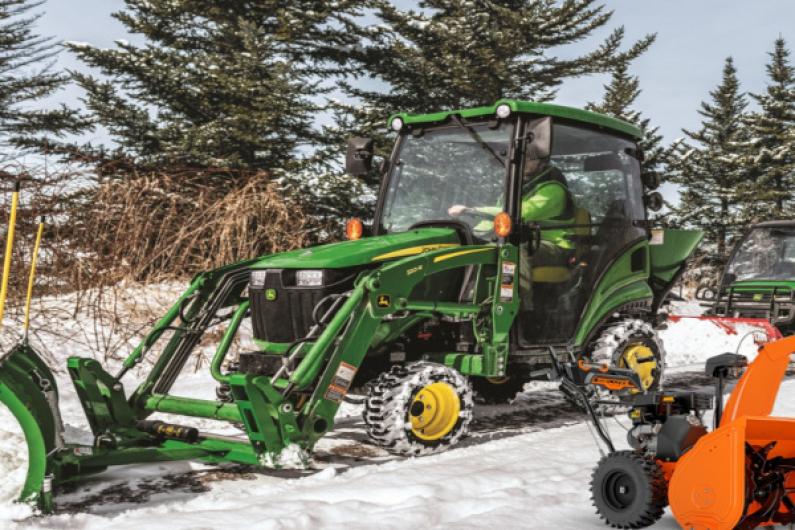
Best Equipment for Dealing with Lake Effect Snow in New York and Pennsylvania
Lake effect snow isn’t a typical winter storm, it’s faster, heavier, and far more demanding on equipment. Snow can fall at an intense rate, quickly covering driveways, lanes, and parking areas before you’ve finished clearing the last pass. The snow itself is often dense and wet, adding weight and resistance that can overwhelm light-duty machines.
For landowners in New York and Pennsylvania near the Great Lakes, lake effect bands can also be unpredictable. One property may see several inches in an hour while another just a mile away gets very little. These conditions mean snow removal isn’t a one-time job; it’s a repeated effort that can last for days. To keep up, you need equipment that’s powerful, reliable, and designed for continuous, heavy use—not a small snowblower built for occasional snowfall.
What is lake effect snow and why it matters for equipment choices
Lake effect snow forms when very cold air moves over relatively warm, unfrozen lake water. The lake heats and moistens the lowest layer of air; that moisture then condenses and falls as narrow, intense bands of snow. Those bands can produce several inches per hour and pile up feet of snow during persistent setups. Because lake effect snowfall can be localized and come in bursts, you’ll face deep drifts, frequent clearing cycles, and frequent need to throw snow far away from driveways and walkways.
Practically speaking, this means:
· Depth and weight: snow depths often exceed what a small single-stage blower can handle; snow can be wetter and heavier (more load on machines).
· Repeat clearing: long storms and repeated bands mean you need machines that won’t overheat from continuous work and that are comfortable for long shifts (heated cabs matter).
· Drifting & wind: equipment with good visibility, higher discharge (to throw snow over tall banks), and options for wing plows or V-plows help manage drifting.
Equipment categories & John Deere recommendations
1) Compact & sub-compact tractors (workhorses for deep snow)
Best when you need real power, traction, and the ability to run large front-mounted snow blowers or heavy blades. John Deere’s 3- and 4-Series compact tractors (and the higher-end 4-Series 4075R) offer horsepower, heavy-duty front axles, optional cabs with heat, and loader capability you’ll want for repeated lake effect clearing. These tractors pair with front
or 3-pt. snow blowers and heavy front blades for efficient, fast clearing of long driveways and large lots.
When to choose a compact/utility tractor:
· Driveways > 300–400 ft, long private lanes, farmsteads, or if you must clear lots/roads on your property regularly.
· Snow depth commonly > 12 inches or with heavy wet snow.
· Need for attachments year-round (loader, forks, brush hog, etc.).
2) Front-mounted & tractor-mounted snow blowers (fastest for heavy accumulations)
For true lake effect conditions, two-stage and tractor-mounted blowers clear deeper, denser snow and throw it farther than single-stage units. John Deere/Frontier front tractor-mounted blowers are available in widths (ex: 47", 54") that match X700-series lawn tractors up into compact tractors and they’re designed for heavy, repetitive use. These blowers often include cast-iron gearboxes and hydraulic lift/rotation for operator convenience.
Sizing tip:
· Short driveways / light accumulations: a 47"–54" blower or a heavy lawn-tractor attachment may suffice.
· Long driveways / frequent deep snowfall: aim for 54"–72" blowers (on a compact tractor) or multiple passes with a wider blower to reduce runtime and engine stress. Use tractor horsepower 35–75 HP for bigger blowers.
(Reference on blower types: two-stage units move deeper/wetter snow better than single-stage models.)
3) John Deere Gator UTVs: nimble, fast, and all-season usefulness
For clearing walkways, sidewalks, smaller driveways, or topping off areas after the tractor work, Gator XUVs with optional sealed cabs, heat, and plow attachments are great. They provide instant 4WD, good maneuverability, and faster ground speed than tractors on long property rounds. For many property owners a full-size XUV (examples: XUV 825/835 series) with a plow is the ideal “follow-up” machine after the main pass.
4) Skid steers / compact loaders for commercial or extreme snow loads
If you’re removing very high accumulations, managing large parking lots, or loading snow into trucks, skid steers and compact track loaders with heavy duty blower, snow push or bucket attachments are the fastest, most durable choice. John Deere’s compact
construction lineup supports dedicated snow attachments and works well where repeated heavy clearing and snow relocation are required.
5) Smaller lawn-tractor attachments (for homeowners)
Lawn tractor snow blowers (47" blower fits select X700 series and larger residential tractors) convert a mowing platform into a winter machine, useful for homeowners with moderate exposure but not ideal for repeated deep lake effect bands. If you rely on this approach, choose two-stage tractor blowers and consider a cab or weather enclosure.
Sizing guide — match the job to the machine
· Light banding (2–6" common): lawn tractor with 47" blower or Gator with a small plow.
· Moderate/recurring bands (6–12"): compact tractor (25–45 HP) with 54"–60" front blower or heavy front blade.
· Deep/very frequent lake effect (12"+ or rapid multiple-inch bursts): 40–75 HP compact/utility tractor with 54"–72" blower or skid steer with blower; heated cab recommended.
· Long driveways (>500 ft): choose wider clearing widths to reduce passes, but balance width with turning radius and storage. A compact tractor with a 54"–72" blower or XUV following for spot work is a common mix.
These are practical ranges. Factors depend on driveway width, surface (paved vs gravel), and how far you must throw snow.
Attachments & accessories you shouldn’t skip
· Tire chains or radial winter tires for traction on packed snow/ice.
· Wheel weights/ballast to improve traction when using front blowers.
· Cab kits / heated cabs — for operator comfort and longer shift capability.
· V-plows and wing plows — for breakdown of deep drifts and faster lane clearing.
· Spare shear bolts, belts, and heavy-duty shear devices — lake effect conditions increase wear; plan for spares. (Attachments and accessories are widely available through John Deere and Frontier attachment lines.)
Safety & efficiency tips for lake effect operations
1. Break the job into passes — don’t try to lift 18" of snow in a single pass with the wrong tool. Use the right blower or make multiple passes.
2. Watch weight on roofs and structures — lake effect events can load roofs rapidly; clear snow safely with proper equipment or hire pros. (Local agencies often post guidance during big events.)
3. Protect the operator — heated cabs, good visibility (LED work lights), and frequent breaks reduce fatigue and accidents.
4. Maintain clear throw paths — plan where you will deposit snow so you’re not blocking sightlines or creating hazards.
5. Service before the season — belts, hydraulics, batteries, coolant, lights and tires should be checked before the first heavy event. Continuous clearing during lake effect events stresses machines — pro servicing is invaluable.
Why buy John Deere for lake effect snow?
John Deere’s lineup offers machines built for repetitive, high-load work (compact tractors with heavy front axles, durable front-mounted blowers and skid-steer attachments, full-size Gators with sealed cabs). Their dealer network supports parts, service, and matched attachment packages so you have the right tool and backup when storms hit. For heavy, wet, repetitive snow, the tractor-plus-blower combination and full-size Gator support are particularly effective.
How LandPro Equipment can help
· Right-sizing & demo: We can help size the tractor, blower, or Gator to your driveway length, typical snow depth, and surface type.
· Snow packages: Bundled options with blowers, plows, cab kits, chains, and service plans tailored for lake effect regions.
· Financing: Seasonal and equipment financing to spread costs.
· Service & parts: Pre-season inspections, winter service plans, spare parts and on-site support during heavy storms.
· Training: Short operator walkthroughs so you and your crew run the equipment efficiently and safely during long lake effect events.
Quick starting checklist (before the first lake effect event)
· Inspect/charge battery, check antifreeze, inspect belts and hydraulics.
· Fit tire chains and wheel weights; pack spare shear bolts.
· Install and test lights and cab heater.
· Verify blower/attachment fit and chute rotation/lift functions.
· Book a LandPro pre-season service and discuss a snow package or demo.
The right tool for unpredictable snow
Lake effect snow demands reliable machines that can handle deep, dense, and rapidly accumulating snow — and operators who can work efficiently through repeated storms. For many NY & PA landowners, the combination of a compact tractor (3–4 Series), a robust front-mounted two-stage blower or V-plow, and a full-size Gator for follow-up work hits the sweet spot for power, flexibility, and year-round value. If you want, LandPro Equipment can evaluate your driveway and property and recommend a tailored package — from a homeowner-grade tractor with a 47"–54" blower to a full utility package for heavy lake effect zones.